
Noticeable changes, unopened mail, missed medications, unsafe stairs, or a decline in grooming, signal it’s time to act. The Alzheimer’s Association (2024) reports holiday gatherings are among the most common moments families first spot dementia symptoms. Assisting Hands Home Care Danville offers a complimentary in-home care assessment to turn these observations into a personalized care plan.
What Should You Prepare Before the Holiday Visit?
Preparation starts with honest awareness, not a clipboard full of questions. Phone calls and video chats flatten the details that matter most. A voice can sound perfectly normal while memory lapses, hygiene neglect, or home safety hazards quietly worsen in the background. That gap is exactly why an in-person holiday visit carries so much weight for adult children trying to gauge how aging parents are doing.
Before arriving, families benefit from setting an intention: observe first, react later. A few practical steps make that easier.
- Decide who will watch for which signs, especially if siblings are splitting time at the house.
- Build a simple holiday checklist for aging parents covering mobility, meals, medication, and mood.
- Agree ahead of time on what distinguishes normal aging vs warning signs so one stumble doesn’t trigger panic, but a pattern does.
- Plan a quiet follow-up conversation for after the visit, away from the holiday rush.
What if siblings live far away and can't check in regularly?
Long distance caregiving makes this preparation even more essential. Infrequent visits may be the only firsthand window a family gets. Sharing the checklist beforehand helps everyone compare notes consistently.
What happens after the visit if concerns show up?
A dedicated Care Management team works with families to turn observations into an actual plan, rather than leaving them to guess. Support can start small, with a few hours of weekly home care, or scale toward full respite care for an exhausted primary caregiver, giving families across the Bay Area options that match what they actually saw.
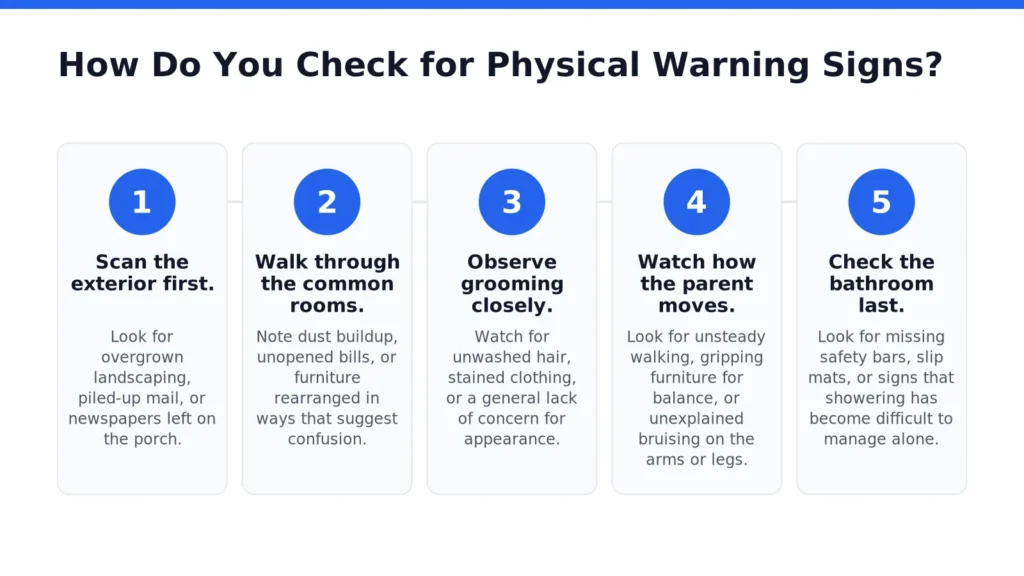
How Do You Check for Physical Warning Signs?
Checking for physical warning signs starts with a simple walk-through, both inside the house and outside, paired with close observation of a parent’s appearance. Visiting adult children often spot the clearest clues within minutes if they know where to look. Neglected yard work, cluttered hallways, and expired food in the refrigerator tend to surface long before a parent admits anything is wrong.
A structured walk-through turns a holiday visit into a practical checklist for assessing aging parents. Family members can follow these steps, in order, during the first hour at the house:
- Scan the exterior first. Look for overgrown landscaping, piled-up mail, or newspapers left on the porch.
- Walk through the common rooms. Note dust buildup, unopened bills, or furniture rearranged in ways that suggest confusion.
- Observe grooming closely. Watch for unwashed hair, stained clothing, or a general lack of concern for appearance.
- Watch how the parent moves. Look for unsteady walking, gripping furniture for balance, or unexplained bruising on the arms or legs.
- Check the bathroom last. Look for missing safety bars, slip mats, or signs that showering has become difficult to manage alone.
What Does Declining Hygiene Usually Signal?
A sudden drop in hygiene rarely reflects simple forgetfulness. It often points to a mental or physical struggle a parent has kept quiet for months. Families who notice this shift should treat it as a cue to discuss added daily support, not something to brush aside until the next visit.
Why Does Fall Risk Deserve Immediate Attention?
Unsteady steps and new bruising matter because a single fall can change an older adult’s independence overnight. [Home care](https://assistinghandsdanvilleca.com/home-care-lafayette-ca/) that includes mobility assistance and fall prevention support addresses these risks directly, with caregivers trained in safe transfer techniques. Bathing, grooming, and dressing support also helps parents manage tasks that have quietly become unsafe to handle alone.
How Do You Notice Cognitive or Behavioral Changes?

Repeated questions, confused conversations, or sudden withdrawal from familiar holiday traditions often signal more than a bad day. Adult children visiting aging parents over the holidays should watch closely for shifts in mood, memory, and social engagement. These moments of extended time together reveal patterns that quick phone calls cannot capture.
A parent who forgets a grandchild’s name mid-conversation, repeats the same story three times in an hour, or seems unusually irritable during a family meal may be showing early signs of cognitive decline rather than ordinary tiredness. Comparing normal aging vs warning signs matters here: occasional forgetfulness is common. Disorientation, sudden personality changes, or difficulty following a conversation point to something more serious.
What Behavioral Signs Should Families Watch For During Visits?
Families gathered for the holidays should look for noticeable changes in how a parent interacts, not just how the house looks. Flat affect, uncharacteristic agitation, social withdrawal from holiday activities, and trouble tracking conversations all warrant closer attention.
- Repeating questions or stories within a short timeframe
- Withdrawing from gift exchanges, meals, or conversations they once enjoyed
- Appearing confused about the date, season, or who is visiting
- Showing irritability or anxiety that seems out of character
When these behavioral shifts appear alongside memory lapses, specialized home care support becomes worth discussing. Caregivers trained to work with Alzheimer’s, dementia, and Parkinson’s disease provide patient assistance while preserving familiar routines, which reduces confusion and anxiety for the parent.
Quality care extends past meal prep and errands. Conversation, encouragement, and steady cognitive engagement from a trained caregiver ease loneliness and help counter the isolation that often accompanies early cognitive decline, giving families confidence between visits.
How Do You Tell Normal Aging From Warning Signs?

Normal aging looks like a parent moving a little slower or forgetting a name now and then. A true warning sign looks different: a subtle shift in health or memory that threatens safety or independence. Needing more help with age is unavoidable; everyone eventually needs support with tasks like house upkeep, medication management, or bathing. The distinction isn’t whether help is needed eventually, but whether a specific change signals a problem right now.
Families visiting for the holidays are in a unique position to catch these shifts. Someone seeing a parent daily may miss gradual changes; someone visiting once or twice a year often spots them immediately.
Is forgetfulness always a dementia warning sign?
Not necessarily. Misplacing keys occasionally fits within normal aging vs warning signs territory. A pattern of confusion about dates, repeated questions, or getting lost in familiar places points toward something more serious and worth professional evaluation.
What should families watch for specifically?
A short comparison helps clarify the difference:
| Normal Aging | Possible Warning Sign |
|---|---|
| Occasional forgetfulness | Repeated confusion or disorientation |
| Slower movement | Unexplained bruising or falls |
| Preferring routine | Neglected hygiene or unopened mail |
| Mild fatigue | Significant weight loss or spoiled food |
When changes appear, a locally owned care agency offering concierge-level service can help families interpret what they’re seeing and decide whether a formal home care plan makes sense. If support becomes necessary, every caregiver assigned works as a trained, screened, insured employee, not an independent contractor, giving families a dependable foundation for the next step.
What Steps Come After You Spot Warning Signs?

Five concrete actions follow a holiday discovery of missed medications, an unsafe home, or sudden confusion in a parent. A family does not need to solve everything during the visit itself. Instead, the goal is to move from worry to a clear plan before everyone scatters back to separate cities.
- Write down specific observations. Note dates, behaviors, and conditions noticed in the home rather than vague impressions, since specifics make later conversations with care professionals more productive.
- Schedule a complimentary in-home assessment. Families who notice concerning changes can arrange a no-cost evaluation to discuss options before the next crisis forces a rushed decision.
- Ask about caregiver matching. Caregivers are paired with clients based on personality and compatibility, not just skill level, which builds trust faster during that first sensitive conversation about accepting help.
- Discuss flexible scheduling, not a locked agreement. Support can start with just a few visits a week; families are never bound to long-term contracts, so care can grow at a comfortable pace.
- Confirm service across the East Bay. Assistance extends through Danville, Alamo, Blackhawk, Diablo, San Ramon, Walnut Creek, Lafayette, Pleasant Hill, and Dublin, so families spread across the region can coordinate one consistent plan.
What if the adult child lives far away?
Long distance caregiving makes follow-through harder once the holiday ends and flights resume. Respite care fills that gap, giving a primary caregiver nearby relief while the long-distance child researches options and checks in by phone.
How soon can care actually begin?
Timing depends on the family’s chosen schedule and the care plan built during the assessment. Many arrangements start within days once the family settles on hours and goals.
Conclusion

In closing, the holiday visit offers families a rare window into their aging parents’ true needs, and the chance to act before crisis forces rushed decisions. When warning signs emerge, compassionate, professional support becomes not a burden but a gift: one that preserves independence, reduces isolation, and allows your loved one to remain safely at home while you enjoy more meaningful time together. Assisting Hands Home Care Danville stands ready to transform those observations into a personalized care plan that honors dignity and strengthens family peace of mind.
Ready to Give Your Parents the Support They Deserve?
Noticing a few of these warning signs doesn’t mean a family has to figure everything out alone. Assisting Hands Home Care Danville offers a complimentary in-home care assessment, trained and insured caregivers matched for compatibility, and flexible scheduling with no long-term contracts, so support can start exactly where it’s needed and grow as circumstances change.
Families across Danville, San Ramon, Alamo, Blackhawk, Diablo, Walnut Creek, Lafayette, Pleasant Hill, and Dublin can take the next step today. Visit assistinghandsdanvilleca.com to schedule a free assessment and turn this holiday’s observations into a personalized care plan that protects independence and brings peace of mind to the whole family.