
When Is It Time for Home Care? 15 Warning Signs Families Often Miss
By Assisting Hands Home Care Danville | Updated July 17, 2026
Watching a parent or loved one grow older isn’t always about noticing one major event. More often, it’s a series of small changes that happen so gradually they’re easy to dismiss.
Maybe Mom forgets to take her medication once. Dad skips a few meals because he “wasn’t hungry.” The laundry starts piling up, the mail goes unopened, or they stop attending social activities they once enjoyed. Individually, these moments may not seem alarming. Together, they often signal that additional support could make a meaningful difference.
Recognizing these warning signs early allows families to make thoughtful decisions instead of rushed ones. Planning ahead gives your loved one a voice in the process, reduces stress, and helps them remain safe, independent, and comfortable in the place they love most—their home.
At Assisting Hands Home Care Danville, we’ve helped families throughout Danville, San Ramon, Alamo, Blackhawk, Walnut Creek, Lafayette, Dublin, Pleasant Hill, and Contra Costa County recognize these early warning signs and create personalized care plans that evolve as needs change.
Why Families Often Miss the Early Signs
One of the biggest challenges with aging is that changes rarely happen overnight.
Professionals sometimes compare it to the “frog in slowly warming water” analogy. Small changes occur gradually, making them easy to rationalize.
A forgotten appointment becomes “everyone forgets sometimes.”
A missed shower becomes “they just weren’t feeling well.”
A stumble becomes “they’ve always been clumsy.”
Each event seems harmless on its own. Over weeks or months, however, these isolated incidents begin forming a pattern that shouldn’t be ignored.
Unfortunately, many families don’t recognize the pattern until after a fall, hospitalization, or medical emergency.
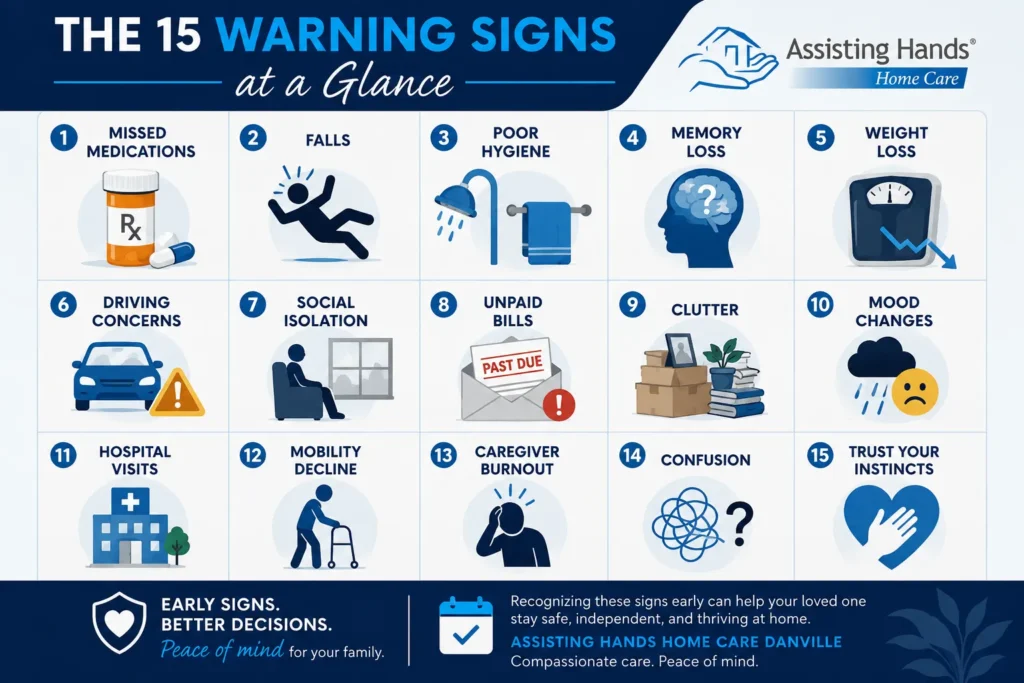
15 Warning Signs It May Be Time for Home Care

1. Medications Are Being Missed
Medication mistakes are one of the earliest warning signs.
Your loved one may:
Forget doses
Take medications twice
Confuse prescriptions
Stop taking medications altogether
Forget doses
Take medications twice
Confuse prescriptions
Stop taking medications altogether
Even minor medication errors can quickly lead to serious health complications.
2. Meals Are Being Skipped
Good nutrition becomes harder as people age.
Watch for:
Weight loss
Expired food
Empty refrigerator
Burned pots
Lack of interest in cooking
Weight loss
Expired food
Empty refrigerator
Burned pots
Lack of interest in cooking
Poor nutrition often leads to weakness, increased fall risk, and declining health.
3. Personal Hygiene Is Declining
A person who has always taken pride in their appearance may suddenly begin wearing the same clothes repeatedly or avoiding bathing.
Signs include:
Body odor
Unwashed hair
Dirty clothing
Difficulty shaving
Poor oral hygiene
Body odor
Unwashed hair
Dirty clothing
Difficulty shaving
Poor oral hygiene
These changes often indicate that daily tasks have become physically or mentally challenging.
4. The Home Is Becoming Unsafe
Look around the home.
Are dishes piling up?
Is laundry everywhere?
Is unopened mail stacking up?
Is clutter creating tripping hazards?
A once-organized home becoming noticeably neglected is often a strong indicator that additional support is needed.
5. Frequent Falls or Balance Problems
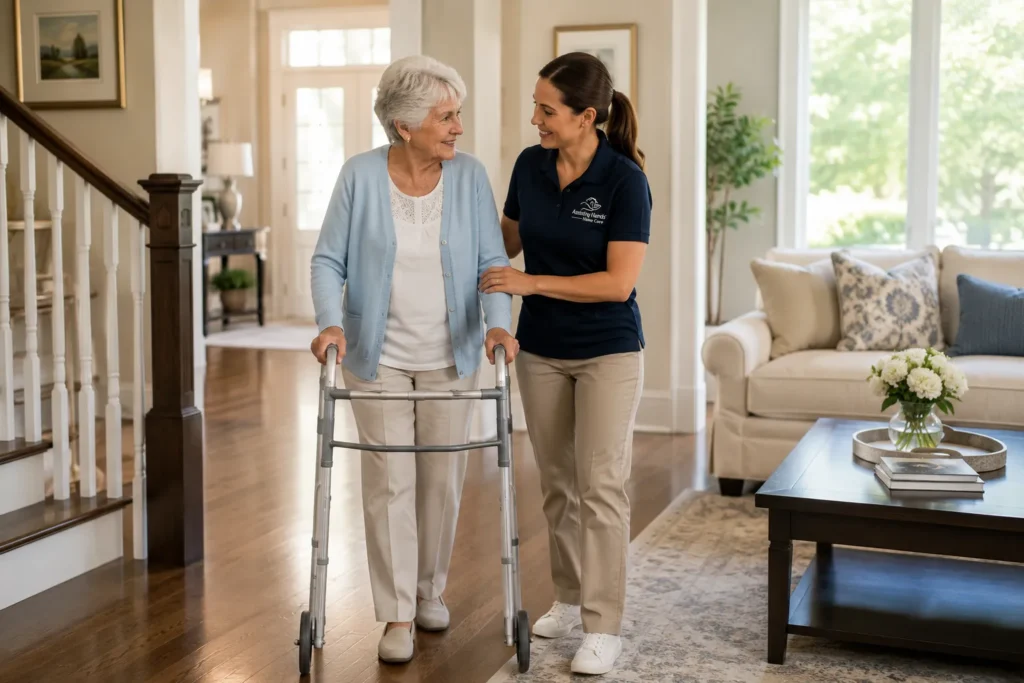
Falls remain one of the leading causes of injury among older adults.
Warning signs include:
Holding onto furniture while walking
Difficulty standing up
Walking slower than usual
New bruises
Fear of walking alone
Holding onto furniture while walking
Difficulty standing up
Walking slower than usual
New bruises
Fear of walking alone
Many seniors never report falls because they fear losing their independence.
6. Memory Problems Are Increasing
Occasionally forgetting a name is normal.
Repeatedly forgetting:
Family members
Appointments
Conversations
Medications
Directions
Family members
Appointments
Conversations
Medications
Directions
may indicate something more significant than normal aging.
Patterns matter far more than isolated incidents.
7. Bills Are Going Unpaid
Financial changes often appear earlier than families realize.
Watch for:
Unopened mail
Late notices
Duplicate purchases
Confusion balancing accounts
Missed payments
Unopened mail
Late notices
Duplicate purchases
Confusion balancing accounts
Missed payments
These changes may indicate cognitive decline or increasing difficulty managing everyday responsibilities.
8. Driving Has Become Unsafe
Driving requires quick decision-making, coordination, and good judgment.
Warning signs include:
New dents on the vehicle
Getting lost
Traffic tickets
Close calls
Avoiding nighttime driving
New dents on the vehicle
Getting lost
Traffic tickets
Close calls
Avoiding nighttime driving
Giving up driving is difficult for many seniors, but safety should always come first.
9. Mobility Is Declining
Simple daily movements become harder over time.
You may notice:
Trouble climbing stairs
Difficulty getting out of bed
Slower walking
Trouble carrying groceries
Increased fatigue
Trouble climbing stairs
Difficulty getting out of bed
Slower walking
Trouble carrying groceries
Increased fatigue
Professional caregivers can help reduce strain while encouraging safe activity.
10. Social Withdrawal
Loneliness has become one of the greatest health risks facing older adults.
Watch for:
Canceling plans
Staying home constantly
Losing interest in hobbies
Avoiding phone calls
Isolation from friends
Canceling plans
Staying home constantly
Losing interest in hobbies
Avoiding phone calls
Isolation from friends
Companionship is one of the most valuable benefits professional caregivers provide.
11. Mood Changes
Depression and anxiety often look different in seniors.
Signs include:
Irritability
Increased frustration
Anxiety
Lack of motivation
Persistent sadness
Irritability
Increased frustration
Anxiety
Lack of motivation
Persistent sadness
These emotional changes frequently accompany physical decline.
12. Family Caregivers Feel Burned Out
Sometimes the biggest warning sign isn’t the senior—it’s the family.
If caregiving is affecting:
Your work
Marriage
Sleep
Health
Mental well-being
Your work
Marriage
Sleep
Health
Mental well-being
it’s time to ask for help.
Professional home care supports both the senior and the entire family.
13. Hospital Visits Are Becoming More Frequent
Repeated emergency room visits often indicate that additional daily support could help prevent future crises.
After a hospitalization, seniors frequently need assistance with:
Medication reminders
Meal preparation
Mobility
Transportation
Recovery
Medication reminders
Meal preparation
Mobility
Transportation
Recovery
Early intervention can reduce the likelihood of hospital readmissions.
14. Confusion Is Becoming More Common
Confusion may appear as:
Repeating questions
Forgetting familiar routes
Wearing inappropriate clothing for the weather
Difficulty following conversations
Wandering
Repeating questions
Forgetting familiar routes
Wearing inappropriate clothing for the weather
Difficulty following conversations
Wandering
These changes should never be ignored.
15. Your Gut Tells You Something Has Changed
Families often notice subtle changes long before anyone can explain them.
If you’ve found yourself thinking:
“I don’t think Mom is doing as well.”
or
“Dad just isn’t himself anymore.”
trust those instincts.
It’s always better to have a professional assessment before a crisis occurs.
Why Acting Early Makes All the Difference
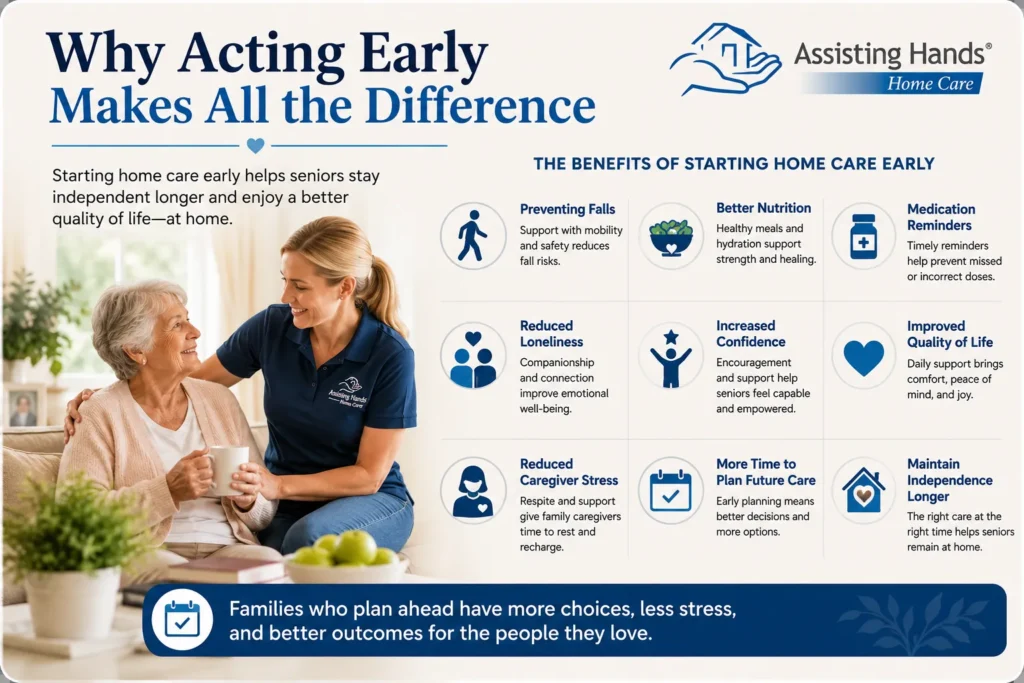
One of the biggest misconceptions about home care is that it’s only needed after a major health event.
In reality, starting care early often helps seniors remain independent longer.
Benefits of early home care include:
Preventing falls
Better nutrition
Medication reminders
Reduced loneliness
Increased confidence
Improved quality of life
Reduced caregiver stress
More time to plan future care
Preventing falls
Better nutrition
Medication reminders
Reduced loneliness
Increased confidence
Improved quality of life
Reduced caregiver stress
More time to plan future care
Families who begin planning before an emergency have significantly more options than those forced to make decisions during a hospitalization or medical crisis. Guidance from senior care experts consistently recommends proactive planning because it preserves independence and reduces stress for both seniors and their families.
How Assisting Hands Home Care Danville Can Help
Every senior has different needs.
That’s why Assisting Hands Home Care Danville creates personalized care plans based on each client’s lifestyle, health, preferences, and goals.
Our caregivers can assist with:
Personal care
Bathing and grooming
Meal preparation
Medication reminders
Light housekeeping
Transportation
Grocery shopping
Companionship
Alzheimer’s and dementia care
Respite care for family caregivers
Personal care
Bathing and grooming
Meal preparation
Medication reminders
Light housekeeping
Transportation
Grocery shopping
Companionship
Alzheimer’s and dementia care
Respite care for family caregivers
We proudly serve seniors and families throughout Danville, San Ramon, Alamo, Blackhawk, Walnut Creek, Lafayette, Dublin, Pleasant Hill, and surrounding Contra Costa County communities.
Our goal isn’t to take away independence—it’s to help seniors maintain it safely for as long as possible.
Frequently Asked Questions
How do I know if my parent needs home care?
If you’re noticing multiple warning signs—such as medication mistakes, poor nutrition, falls, memory changes, or difficulty managing daily activities—it may be time to schedule a professional in-home assessment.
Is home care only for seniors with serious medical conditions?
No. Many seniors receive home care simply to stay independent, safe, and socially engaged. Care can begin with just a few hours each week and increase as needs change.
How many hours of care can someone receive?
Care plans are fully customizable. Some clients need only a few hours of assistance each week, while others benefit from daily or around-the-clock support.
Can home care help someone with Alzheimer’s or dementia?
Yes. Specially trained caregivers provide routine, companionship, supervision, and personalized support that helps individuals living with memory loss remain safely at home.
Schedule Your Complimentary In-Home Care Assessment
If you’re beginning to notice these warning signs, don’t wait for a fall, hospitalization, or emergency to make difficult decisions.
The experienced team at Assisting Hands Home Care Danville can help you understand your options, answer your questions, and create a personalized care plan that fits your loved one’s unique needs.
Contact Assisting Hands Home Care Danville today at (925) 332-1276 and schedule your complimentary in-home assessment and learn how compassionate, professional care can help your loved one continue living safely and comfortably at home.